Featured

Marketing Blog Post #5 – Social Media Marketing: ROI

How does one know that their advertising and marketing done online has been successful? Is there a way to measure the actual return on investments when doing business in an online fashion?

The above are some key questions when looking to gain all information required to accurately and effectively use Social Media as a marketing tool.

Social Media KPIs and Tools for Measurement

KPI’s, what are they? Key Performance Indicators (KPI’s) are what you are going to be measuring. So, when you apply that to an everyday scenario, these are the targets you need to meet at your job, the goals you have personally, the objectives of a lesson in school, etc.

Photo by Charles Deluvio on Unsplash

On Social Media, your KPI’s must be measurable in some way (Gil, 2019). They need to be specific to the platform that the company is using and they need to be more than just, ‘obtain 1,000 likes on this post’. Setting effective, measurable and reliable KPI’s allows Social Media marketing to be strategic and closely aligned with business goals.

Effective KPI’s revolve around the 4 C’s (as Gil refers to them); content, community, consistency and conversion (2019). If companies are critical of their marketing and focus on one of those ‘C’s’, the company is narrowing their marketing to become more effective on Social Media platforms. This approach, done correctly, leads to successful Social Media marketing and an effective return on investment (ROI).

Decoding Social Media Analytics: What Does It Mean?

Analytics, what are they? How do you manage them? Is each Social Media site different? All of these familiar questions will pop up indefinitely while using Social Media for marketing purposes. With most of the analytics that come with Facebook, Twitter, LinkedIn, etc, there are ways to keep in mind the KPI’s that you are measuring to find the analytics on the platform that will be suitable for you.

Photo by Yana Nikulina on Unsplash

It is also essential that the platform used will produce the most accurate information. If this is unavoidable, then it is key to know which interactions; likes, re-tweets, shares, etc. are acceptable to use in metrics and analysis and why.

An example that Gil dives into is when companies measure ROI on Instagram then the ‘likes’ should not be measured in any type of analytic (2019). He mentions this because said ‘likes’ are not a Call To Action, rather than a simple – and often mindless – interaction between users on Social Media.

Driving Measurable ROI on Each Channel

Naturally, for each Social Media platform, there will certainly be different measurable ROI’s for each.  In 2019, Gil explains that some platforms have large pools of analytics, such as Facebook and Instagram. Whereas others have more limited data, such as LinkedIn (Gil, 2019).

One commonality amongst all of the platforms however is that they all have analytics that can be personalized and optimized. Most platforms will provide you with your ‘top-performing’ post, video or story. By doing so, this allows you to understand what works best for your audience (Gil, 2019).

YouTube incentivizes users to create content by providing monetary funds for YouTuber’s who have more than 1000 subscribers. Simple math in this situation is the more videos you produce the more ads you will generate leading to the more money you will make (Gil, 2019).

By better understanding the ins and outs of each platform, companies are able to tailor their marketing, promotions and ultimately, their ROI, to each network. By doing this, they are optimizing their efforts for the most successful campaign and return.

Bonus Strategies for Maximizing ROI 

Maximizing your ROI should be a fairly simple method and it truly is. Gil helps explain this simply; post often, use engaging visuals and have a Call To Action (2019). By doing those three tasks a company’s ROI would be a natural progression.

Another key to maximizing return on investment is to continue to ‘think like a customer’ (Gil, 2019). How much do you like a pushy car salesman when you are walking through a lot? How about those kiosks in malls that give you samples as a way to lure you into a sale? The more you try to sell something, the more the consumer usually backs away.

By simplifying the marketing strategy and thinking how a customer would like to be approached, companies are really getting into the Social Media Marketing mindset!

Conclusion

When thinking about ROI’s and how that would relate to Social Media Marketing, I was excited at learning new content and delving into other areas. However, when watching the LinkedIn Learning videos by Carlos Gil, I found myself disengaged the entire time. Whether it was the drastic pace that he took, or the repetitive nature (both in his own videos and with previous ones), I struggled to find new, relating and engaging material.

In this situation, I am struggling to find an example to relate to or to apply, so instead I will relate the information to my everyday Social Media activity. My biggest take-away in this entire series was the YouTube information. I think I enjoyed this the most because it was something new that was not covered. I did some investigating into my favourite YouTube videos and they all fell into the pattern that Gil related; they were from popular influencers; they had a catchy title that was usually a ‘tips’ or ‘how-to’ and each video had a purpose – usually stated by the YouTuber.

Photo by Nong Vang on Unsplash

Additionally, when Gil touched on Instagram and related the Instagram Stories to being the “star of your own reality series” a light bulb moment happened for me (2019). I have never thought of the stories in this perspective, and it is totally correct. I found myself reflecting on the regular Instagram stories that I view and indeed, it is a story of someone’s life. This is a huge drive in sales, engagement and potential Calls to Action. If I were to be more involved in Social Media Marketing personally, I would definitely struggle with this aspect of Instagram, which could lead to using a different social media platform all together.

Thanks again for reading!

References

Gil, C. (2019, October). Social media marketing: ROI, video recording, LinkedIn Learning.  

Photo by Nong Vang on Unsplash

Photo by Yana Nikulina on Unsplash

Photo by Charles Deluvio on Unsplash
Featured

Marketing Blog Post #2 – Advertising on Facebook

How Many Can You Reach?

Overview of Facebook Ads

Facebook Ads are unique and a major part of advertising for companies in the 21st Century. Megan Adams does a great job in explaining and demonstrating how to effectively use Facebook as an advertising platforms for companies (2019). Guiding questions while creating advertisments should be;
– What is your goal?
– Who are you targeting?
– What is your budget?
– How will you pay?
Once these questions are answered, the advertiser may begin to develop their ad for their chosen audience (Adams, 2019).

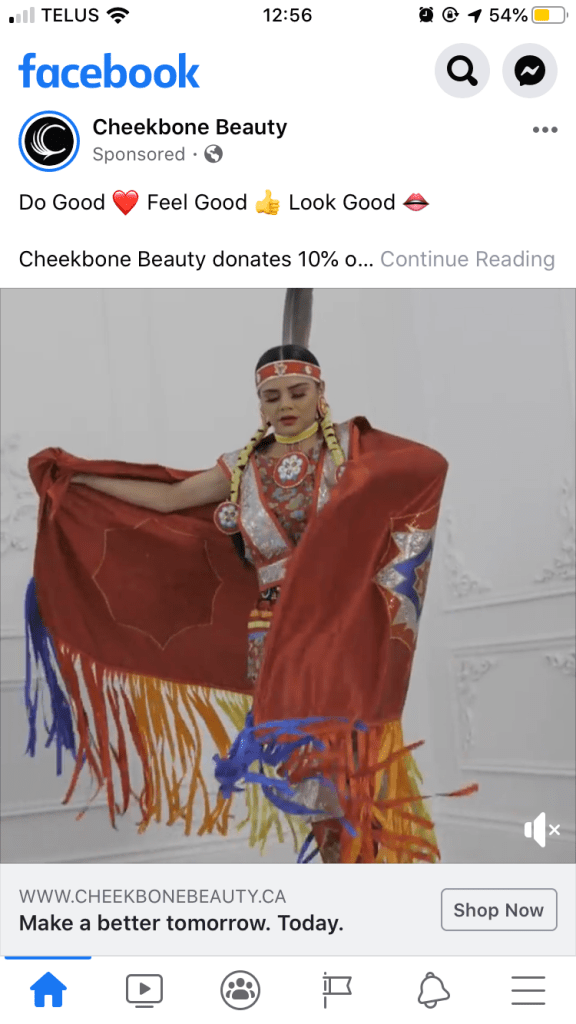
Above – Beauty company with Call to Action ‘Shop Now’. Photo is a screen capture from author.

Facebook is inherently unique because of the fact that creator can specifically target specific demographics, interests and locations of their target market. This allows the advertisements to be the most effective that they can be. By incorporating the ‘Call to Action’ – also referenced by Lurie in his 2014 LinkedIn Learning videos – the advertiser allows the target market to know exactly what they want them to do. This is done with a specific button that allows you to ‘buy now’ or ‘learn more’ (Adams, 2019).

I know that personally, Facebook does a very good job in providing the advertisements relative to each person. The algorithms use, truly work. I have used many of these advertisements to either influence a purchase or spark future interest in a product.

How Facebook Ads Work and How to Create Them

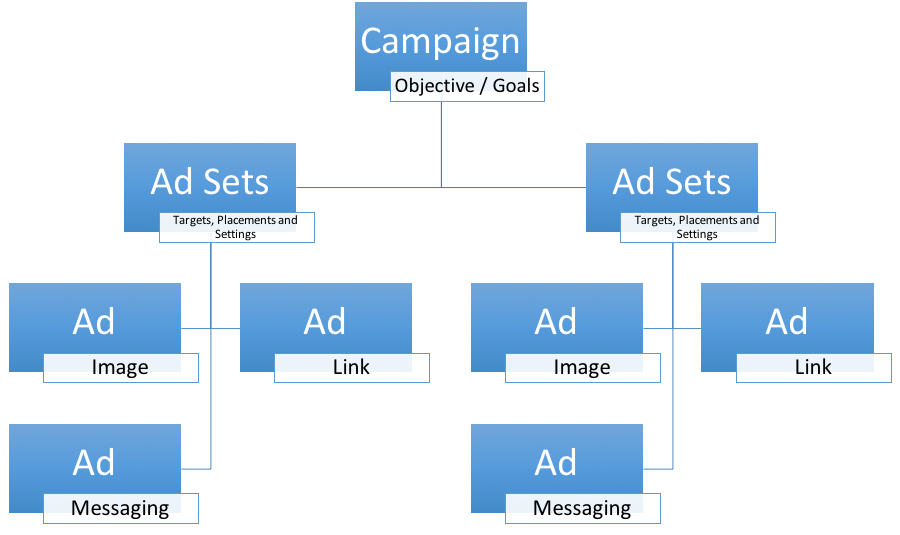
Facebook Ads are fairly linear and easy to navigate. They focus on Ad Campaigns which have various Ad Sets and then a multitude of single advertisements to diversify the overall campaign message. This campaign is unique for each target market and goal of the company. The following photo is a visual aid to explain the structure of Facebook Ads.

When creating Facebook Ads, again, the first step to do is to choose the target audience. Such targets can be interest based, behaviour based and connections based. By using interests to target your audience, you are able to target anyone who matches at least one of your criteria listed. Regardless of the method you use to target your audience, the first step is recognizing that there are multiple ways to do so using Facebook Ads. It is also essential not to include too many of the targets. Adams strongly recommends using anywhere between 1-3 targets in each area with 5 being the absolute maximum (2019).

Viewing your Data and Implementing Best Practices

The benefit of advertising through Facebook is the amount of data that is presented specifically to your ad, ad set and overall campaign. Details include; money spent, impressions, reach, link clicks, etc. The tracking that Facebook does allows for accurate and instantaneous information.

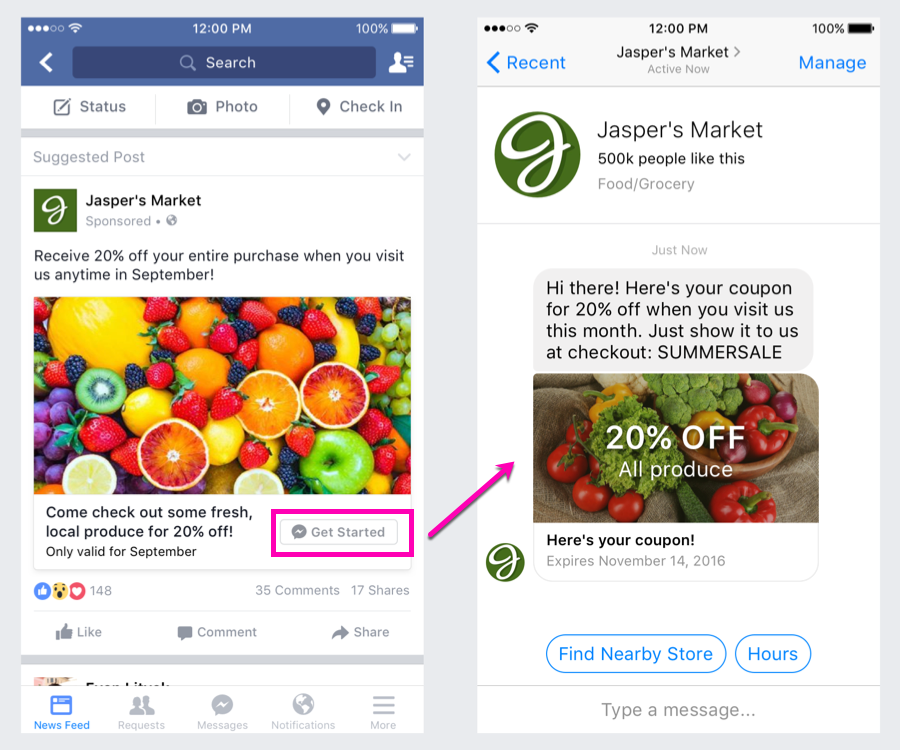
Nussey (2019) provides an example of Call to Action which is directly related to the advertisement as required.

When finding best practices whilst using Facebook for advertising, some key items need to be addressed; ‘Call to Action’, imagery and formatting. The Call to Action, as referenced by both Lurie, 2014, and Adams, 2019, is the action button at the bottom of any advertisement. This button should lead directly to the page related to the ad and must be relevant to the content. All images included in the advertisement must be clear, relevant and accurately formatted to be most effective.

Conclusion

As a page manager for a non-profit organization, the videos done by Adams in 2019 are very relatable. They demonstrate how an advertisement can enhance the traffic to a specific page, area or event. By raising awareness, the brand recognition and event reach are increased indefinitely. Going forward, it is exciting to try some of the tricks provided to be able to benefit the club moving forward.

Thanks for reading! Keep an eye out for the next blog post.
~Adelle


Sources

Adams, M. (2019, October). Advertising on Facebook, video recording, LinkedIn Learning.  

Image by NeONBRAND on Unsplash

Lurie, I. (2014, May 30). Writing Marketing Copy. Carpentaria, CA lynda.com.

Nussey, Virginia. (2019, October 15). 7 unexpected tips that will make your Facebook ads more effective. Search Engine Journal. https://www.searchenginejournal.com/tips-facebook-ads-more-effective/328531/#close

Featured

Marketing Blog Post #1 – Learning to Write Copy

Preparation, organization and focus.

Overview and Writing Copy

Writing copy is an interesting task. There are not only physical challenge that come with it , grammar, spelling, etc., but there are also mental challenges. Being in the right state of mind whilst writing is crucial to being creative, persuasive and effective. Ian Lurie identifies some of these in his LinkedIn lectures done in May of 2014 as well as other important writing concepts. This is often the most difficult part, especially for myself who is easily distracted. Taking the time and making a conscious effort to limit distractions, people and plan to write is the most daunting part of writing effectively.

To put it succinctly, writing is an art form that is designed to catch a reader, sell the reader something, whether it be a story, product or idea and then provide a “call to action” (Lurie, 2014). This call to action, repeatedly brought up by Lurie in his lectures, is the place where readers will go to learn more and it is the most critical component of any writing piece.

When writing, to have an effective call to action, the most appropriate collateral, style and medium must be chosen. Collateral being the ‘type’ of document; letter, pamphlet and so on. Style is the tone the writer is using; soft, scare tactics, etc. and finally the medium, which today really comes down to is this for print or online sources (Lurie, 2014).

Rewriting Existing Copy

Lurie identifies crucial topics in this section of his videos and reminds the listener that while rewriting coffee can be difficult, it does not have to be insulting to the original artist (2014). Key points to remember while rewriting copy is to firstly understand the context of the original piece and improving the piece without restructuring it. The simplest way to do so is to follow three rules; eliminate unnecessary words, edit for an active voice and proofread (Lurie, 2014). By completing these simple steps, one can easily improve any piece of copy.

Being a teacher, I am confident in my ability to ‘rewrite’ copy or others work. I couldn’t agree more with Lurie, that it is essential to keep the integrity of someones work whilst reviewing it. Taking the point of view or perspective from the author is detrimental to providing constructive criticism.

Conclusion

Personally, what I think is the most important lesson from Lurie’s lectures was the topic of the Golden Ratio Typography (GRT) which was developed by Chris Pearson. In 2019, Pearson explained that the GRT is simply “the science of using the golden ratio to determine precise typographic proportions like font sizes, line heights, and associated spacing” (para. 1). This simple formula is the key aspect of keeping a reader visually interested in reading.

Being cognizant of what you are writing, whom you are writing for and the purpose will allow you, as a writer, to be more focused and productive. Writing in an active tense and using less words is a daunting task, but one that is proven to be effective (Lurie, 2014). My goal with these blog posts is to continue to hone my writing skills focusing on writing actively and with purpose.

Thanks for reading! Keep an eye out for the next blog post.
~Adelle


Sources

Lurie, I. (2014, May 30). Writing Marketing Copy. Carpentaria, CA lynda.com.

Pearson, C. (2005-2019). Golden Ratio Typography. Retrieved 01 11, 2020, from pearsonified: https://pearsonified.com/projects/golden-ratio-typography

Image by Free-Photos from Pixabay

Marketing Blog Post #6 – Google Ads Fundamentals

Photo by Rajeshwar Bachu on Unsplash

Introduction

Throughout this blog, there had definitely been some re-occurring themes that have been touched on, identified or elaborated on by multiple presenters. This also applies to the Google Ads Search Workshop. ‘Call to Action’, ‘Landing Page’, ‘Return on Ad/Investment’; all of those phrases have been repeatedly used and focused on throughout the duration of this course.

Google Ads also focuses on these elements to create the most relevant, successful and effective Ads and campaigns. The convenient thing about Google Ads, however, is the availability of a plethora of platforms, apps, extensions and search techniques that are available to companies.

Smart Campaigns

When using smart campaigns through Google Ads, one is simply put, choosing a business goal to focus on and using machine learning to deliver the best results possible. This campaign is simple, effective and free for customization. Companies choose, like they have through our other advertising platforms, their content, goal, location, language, budget, etc. However, unique abilities of Google Ads are ad extensions, device targeting, keyword development (broad match, phrase match, etc) to allow the most accurate searcher to see your advertisement.

There are multiple ways to advertise through Google, from Search, Videos, Apps to so much more. Google Search Ads are quickly rising in popularity and seem to offer the most flexibility when it comes to advertising. The control of the ads can be left in the hands of the advertiser, or it can be determined through automation mixing and matching the various headlines and descriptions that were provided to have the most optimal ad.

Ad Auction and Ad Rank

Ad auctions are just that, an advertisement that is pulled by the search due to relevancy with an attached ‘bid’. All ads are then compared and ranked through their quality score. The higher the quality usually means the less you will pay and the better positions an advertiser will get.

To have a quality ad, it must have an expected click through rate that is unique to the advertisers product / service. It must be relevant in terms of copy, it also helps to add negative keywords. Finally it must have an effective landing page that is consistent, transparent and trustworthy. To improve your ad rank, you must first increse your quality score by addressing the above.

Extensions

Search Ad extensions are imporatnt because they are quick results that contribute to the experience of the customer. Extensions contain relevant and useful information that, when used properly, can increase engagement, obtain more qualified leads and produce higher quality ads.

Popular and universal ad extensions mentioned throughout this program were Sitelinks, Callout and Structured Snippet Extensions. All of which increase engagement and seek to obtain a customer whether though more conversions, enhanced features of easy implementation.

Optimization Score

Optimization scores are on a sliding scale from 0% through to 100%. The score are instant, real time estimates that are customized to the advertisers account. The score is also scalable to allow for a more in depth approach to the business strategy.

Your personalized optimization score is determined by using an algorithm on the effectiveness of your campaign. It is then given a score from 0%-100%. However, Google recognizes that feedback is essential for growth and along with providing a score, it also provides recommendations of where the advertiser can make further enhancements to increase their optimization score.

Combine the optimization score with the performance planner and Google Ads becomes an effective, reliable and efficient way to spend the advertising budget. Performance planner is a forecasting tool that uses machine learning to determine optimal bids of the advertiser. It drives incremental conversions, promotes business growth, aids in review and eventual changes all on a monthly basis. This timeline is long enough to gain accurate results while still being short enough to make changes and still be effective.

Conclusion

Now, while I really enjoyed the first few sections of this certificate, it became more and more difficult to relate the content and information just from reading a very basic ‘user guide’. Google Ads has so much to offer and such a wide array of tools for advertisers to use that it can be overwhelming.

After some reflection on my journey through this certificate, I wish that I would have applied examples as I was going. It would have been helpful to understand the interface of Google Ads and exactly how each section related to the actual ad creation, campaign development and settings.

The content was relatively easy to understand, but without prior experience or terminology (as showcased in my previous blogs) I would have been even more confused that I was to start. At times, paragraphs would need to be re-read, lines re-written and topics re-examined in order to fully comprehend – or at least I thought I was fully comprehending the information.

This, however, proved me to be naive to the nature of Google Ads and the variance of their ‘knowledge checks’ to their 50 question test to gain the certificate. The questions in the knowledge checks were applied knowledge and understanding questions that were relatively general in nature and one would say, easy.

The final test to gain the certificate was not. It certainly applied the knowledge but in a way that was more confusing and frustrating than previous questions were. The longer a person let this informaiton sit, the faster it disipated from my mind, resulting in a 65% examination and the requirement to re-take the test in 24 hours to obtain the certifcate.

To say I am disappointed in myself for not getting this the first time is fair. However, it also made me realize that maybe marketing is not my area of expertise. I feel lost in a sea of terms, conversions and excitement and am instead left with dread, concern and confusion. I will continue with the Google Ads Certification though to prove to myself that the content is relevant to my understanding and look forward to being able to hopefully utilize my knowledge (even if it is just as a referral to others).

Thanks for hanging around, I hope you enjoyed as much as I did. Until next time, Adios my friends.

References

Photo by Rajeshwar Bachu on Unsplash

Skillshop. (2019, September 7). Google ads search certification. https://skillshop.exceedlms.com/student/path/18128-google-ads-search-certification

Marketing Blog Post #4 – Social Media Marketing: Social CRM

Social Customer Relationship Management (Social CRM). This term is becoming more and more popular among businesses worldwide. Online strategies and Social Media posts are quickly becoming the most popular way that companies engage with their consumers. By having an effective and relatable Social SRM strategy, companies are engaging and providing the best customer service they can in the most popular way.

Get Started

Social CRM begins by focusing on answering the question Adams poses of “how do you add Social CRM to your business strategy?” (2018). This small questions lead Adams to provide detailed insight into Social CRM and how it can benefit or hinder a company’s relationship with its consumers.

Photo by Gia Oris on Unsplash

She explains that Social CRM is a process that requires not only leadership support, strategy alignment and changes in processes, but it is very heavy in analytics and data interpretation in order to be successful (2018). The eventual benefits of a Social CRM would be boosted sales, streamlined marketing and outstanding customer service (Adams, 2018). Clearly, the companies that are already using a Social CRM and have developed online relationships with their customers are already leaps and bounds ahead of those companies that are not.

This social engagement and relationship development comes from interacting on Social Media platforms. This interaction between provider and consumer quickly becomes personal (as most things do on Social Media) and can completely affect the relationship that consumers have with the brand, company and/or merchandise.

Develop Your Strategy

Developing a strategy for a successful use of Social CRM’s is crucial. It comes from building a quality Social CRM team that can humanize and personalize their marketing, strategy and interactions whilst using Social Media (Adams, 2018).

Now, what is humanizing and personalizing, couldn’t they be perceived as the same thing? Well, Adams in 2018 explains that if companies are able to humanize (create brand/company personality) and develop conversations as well as personalize (customize each customer interaction) then these companies are acknowledging the Social Media keys to success.

People do not like feeling that they are ‘one-in-a-million’, they like to imagine that they they are the ‘only-one-in-a-million’. Companies that create a personal and humanized interaction with all of their customers via Social Media are paving their way to creating successful relationships with their customers.

Managing Social CRM

One of the most effective ways to have an effective Social Media presence and progressive CRM is to have active and respected influencers (Adams, 2018). By doing this you create an audience that is relevant to your brand and enhances customer engagement (Adams, 2018).

Influencers assist in Social CRM by providing companies with a way to understand their customers and needs expressed by them. It provides much needed analytics to measure, interpret and possibly change.

One industry that has particularly benefited from having effective and trusted influencers is the Beauty Industry. Beauty influencers have such an expansive and dedicated reach of followers that using them drives action from consumers. These consumers usually were with the influencer before they became an influencer. This trusted relationship evolves and provides companies with an opportunity to ‘test’ products and methods to receive honest and valued feedback.

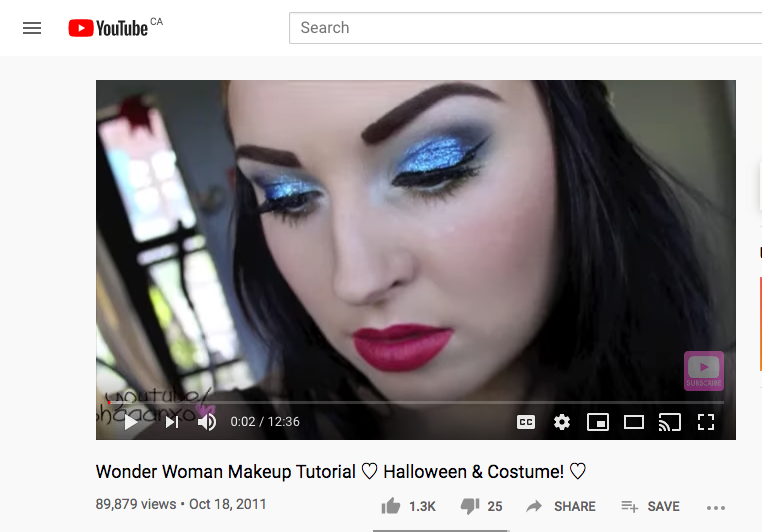
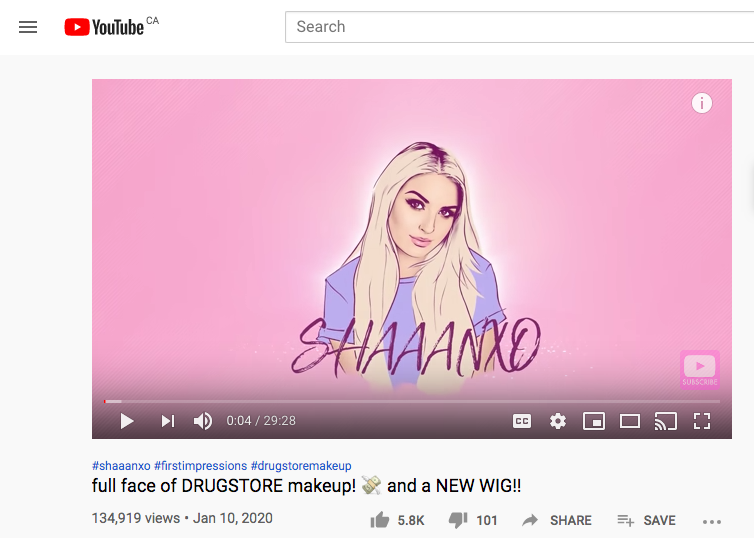
An example of this is the Beauty influencer Shaaanxo. Personally, I began viewing her YouTube videos in 2014 when she was a young adult just doing make-up tutorials. Now, Shaaanxo is a respected beauty brand with Shannon having her own products, make-up line and massive following for providing information on other beauty products marketed internationally. Below on the left is the first video I ever watched of hers, which had around 90,000 views and 1,300 likes. Now, head to a video posted in January, her following has not only increased in 8 years, but so has the interaction that followers have; 135,000 views and 5,800 likes.

Her opinion, view and values all are evident when product testing or referrals. Her influence on her followers is tremendous and is used by many Beauty Industry companies to date. Key Social Influencers are crucial in driving online and social media sales.

Your Toolkit

In order to be successful with Social Media CRM, companies must ways to document processes and determine success criteria (Adams, 2018). To do this, businesses need to focus on metrics, interfaces, documentation and, again, alignment with business strategies (Adams, 2018). Adams also encourages companies to specifically focus on unique frameworks and goals for their organization (2018).

By using successful processes and tools, businesses are able to create new standards, build stronger connections and leverage various media channels (Adams, 2018). Adams also quotes Peter Drucker in 2018, saying “what gets measured, gets improved”. Using this quotation only to direct the Social Media CRM in any company would provide a starting place for enhancement, improvement and dedication.

One important tool that Adams continually addresses throughout the videos is the opportunity Social CRM provides companies to develop direct relationships with consumers (2018). Social CRM is an immediate feedback process that allows employers to be ‘on-top-of’ feedback, concerns, complaints and recommendations. The generations using Social Media are used to instantaneous feedback and my companies recognizing this it allows for a unique and manageable relationship.

Conclusion

By being available online, organizations have set up to be accessed instantaneously. This can be through Facebook Messenger, Instagram Messages, Chat windows on company websites, etc. By doing this, customer relationships are managed quickly and, usually, effectively.

Anyone who uses the internet and social media has experienced the weird coincidence of researching a product, maybe on Amazon, and then later that day, seeing advertisements for that same product on your social media feeds. This is from companies having specific customer profiles that allow for the most effective advertising and interactions between companies and consumers.

Although I understand that for companies, this unique tracking tool takes the guess-work out of advertising to certain people, it also feels very much like an invasion of privacy. I think that effective Social Media CRM should work to improve this perception to allow for an even more effective Social CRM framework.

References

Adams, M. (2018, April). Social media marketing: Social CRM, video recording, LinkedIn Learning.  

Photo by Daria Nepriakhina on Unsplash

Marketing Blog #3 – LinkedIn Learning for Students

Photo by Clark Tibbs on Unsplash

Create Your Profile

Creating a LinkedIn profile is engaging, self-fulfilling. It allows you to showcase your skills to colleagues, possible employers and followers. Creating a profile is the opportunity to create your professional identity. This identity is developed as you see it, envision it and what you will continue to uphold.

Schinkten states the importance of your profile being professional, yet personable (2018). When creating the profile, it is critical to upload a photo that portrays the most recent ‘you’. Schinkten also explains that your profile will be immediately enhanced by creating an engaging, provoking and concise headline and summary as well (2018).

In my opinion, so far, LinkedIn has set out what it has intended to do; create a social media platform for professionals who wish to grow and expand. This was all started by users creating their profiles based on the recommendations of the platform which were confidently outlined by Schinkten in 2018.

Think of LinkedIn as your ‘Facebook’ for professional means. Everyone using this platform is using it to connect, build, develop and grow their own professional mind. It is a unique world, LinkedIn, and by creating an in depth, accurate and engaging profile, you are opening the door to this new world.

Build Your Network

The greatest thing about LinkedIn is the opportunity to gain insight, follow inspirations and gain understanding into the professional world. LinkedIn is about making connections and developing an engaging platform to post, comment and communicate (Schinkten, 2018).

Building a network reflective of your personality, professionalism and aspirations is critical. This allows users to get the most out of this social media platform. Schinkten demonstrates that there are so many various ways to connect with others; searches, common connections, being part of the same group, work, etc. (2018). LinkedIn provides you with an alternative professional platform to connect with people who enhance your goals, values and growth plan.

Connect with those that are going to help you grow and who you are able to collaborate with. Networking is critical in the professional world. The people you network with are a direct reflection of you, so remember, keep it, well, professional! I have recently been connecting with more international influencers and female leaders to keep myself engaged, focused and inspired for growth.

Using LinkedIn Day-To-Day

LinkedIn can be used in whichever fashion is suitable for the user. In short , if you want to be part of a group, you can; if you want to have a better digital footprint, you can; if you want to post articles for others to read, you can! You can engage with people across the world with the same interests, education, alma mater and more as you. The connections and growth opportunities are endless.

Schinkten describes LinkedIn as a phenomenal place to shed a positive and professional light on your digital footprint (2018). By being an active member on LinkedIn, your online presence is increased (2018). It is up to you whether that presence is positive or negative. This is your chance to be a meaningful, inspiring or everyday cause and to make a difference. Ultimately, the choice is yours.

The biggest recommendation Schinkten makes is to be genuine, sincere and realistic with your postings (2018). This allows you to have an accurate depiction of who you are in the professional world.

Job Search & Company Research

Photo by Tim Mossholder on Unsplash

Not only is LinkedIn a Social Media platform that allows you to collaborate with professionals. It is also a meeting site for employees and potential employers. LinkedIn is a platform where companies are excited about providing their information to potential employees and by doing so, employers are providing all the necessary information and opportunities for prospective employees to all research, job applications in one area (Schinkten, 2018).

Using LinkedIn, employees have easily accessible information to use to prepare for any interaction with potential employers. This also applies going the other way; employers are able to verify potential employee information by using LinkedIn and the many features it has.

This feature of LinkedIn is one of my favourites because you can connect with companies that you never would have thought of before. LinkedIn is a safe, reliable and accurate way to engage with potential employers. Whether a job comes out of it or not, you are still able to make a strong connection if gone about in the right way.

Manage Your LinkedIn Account

LinkedIn is unique in the sense that its platform is completely free to all users. This fact alone is a rarity for many online platforms as broad as LinkedIn is. Although, there are options to become a ‘Premium’ LinkedIn member as well. Schinkten explains that the opportunities provided are more advanced way to enhance your professional status (2018). Some opportunities included are; detailed reports of who has been viewing your profile, job postings tailored to your qualifications and more.

Photo by Tim Mossholder on Unsplash

When managing your LinkedIn account, it is also important to remember that you, as the profile owner, can edit your settings to be private or public whilst viewing others (Schinkten, 2018). This means that if you are exploring possible connections, employees, etc. that you can turn your profile to private and they will not be notified that you have done so.

This setting would be very advantageous for employers to use while investigating the potential employees that have applied for the position. LinkedIn should not only match the applicant, but it should also present the employee in an acceptable, professional and engaging way.

Conclusion

Many years ago, I joined LinkedIn because of a company wide initiative. Once created, it was quickly forgotten about and left to collect the world wide web dust and quickly become an outdated, standing still in time reflection of my life in 2014. However, after beginning a career abroad, LinkedIn quickly became an accessible and efficient way of connecting with possible employees, colleagues and even friends. From there, I became more involved in my posting, more engaged with my connections and more reflective on the content which I included.

While listening to Schinkten speak about LinkedIn for students, I am very proud to say that I was utilizing LinkedIn to my best abilities and that I could go even further. With that, my biggest and most exciting ‘take-away’ from Schinkten’s videos were the explanation of publishing and article creation (2018). This is an aspect of LinkedIn I am excited to try. Also, I am terrified to share my thoughts to a community of colleagues, inspirations and professional acquaintances for them to reflect and engage as well.

Sources:

Schinkten, O. (2020, February). LinkedIn Learning for students, video recording, LinkedIn Learning.  

Photo by Anastasia Dulgier on Unsplash

Photo by Clark Tibbs on Unsplash

Photo by Heather Zabriskie on Unsplash

Photo by Tim Mossholder on Unsplash

Design a site like this with WordPress.com
Get started